If talking about Formula 1, certainly not out of security talks about the race car with super high speed. Why Ayrton Senna (San Marino GP 1994) which crash visible light, was more fatal than a collision Robert Kubica (GP Canada 2007) that seems far more terrifying?
Here are 10 of the many deaths in the history of Formula 1 that "establish" security Formula 1 today.
10. Lorenzo Bandini (1935-1967), driver Italia, meninggal di GP Monako 1967

Having lost control of his car in a chicane, the car rear tires on the road divider and makes the car spin up Bandini crashed into a pole and turned around.
The pole fell and penetrated the fuel tank, so there was a fire that once made Bandini trapped. Furthermore, the car exploded because of hot steam from the fuel gas exhaust pipe. Bandini suffered severe burns and was treated at a local hospital for 3 days, before it finally died on May 10, 1967.
9. Roger Williamson (1948-1973), British driver, died at the Dutch Grand Prix 1973

After one of his tires suddenly lost pressure and deflated, Williamson hit a barrier wall at high speed and dragged as far as 275 meters.
The car ended upside down and its fuel tank begins to burn. One other rider, David Purley (1945-1985) stopped the car and volunteered to try to help Williamson out of his car.
Yet his efforts also failed because the car's position is reversed. Unfortunately the suspect actually marshal Purley car crashes. Upon learning the true condition, marshal fire extinguisher did not work as well to help Williamson.
Larger trucks recently arrived almost 10 minutes later, where Williamson had already been killed by asphyxia.
8. Koinigg Helmuth (1948-1974), Austrian driver, died in the United States GP 1974

Deaths due to the installation of Armco barrier metal that is not appropriate. After suffering a suspension failure in the slow corners, the car hit the Armco barrier wall with your head against the wall Koinigg first.
Low-speed car but due to the Armco is not installed properly (the sharp edges are still visible!), metal barrier that also sharply Koinigg injuring his neck until his head severed.
7. Tom Pryce (1949-1977), the driver of Wales, died in South African GP 1977.
 The most bizarre deaths in the F1 circuit of the review the cause, which is crushed by tank fire extinguisher weighing 20 kg. Renzo Zorzi is just an accident, due to the fuel gauge is broken.
He parked his car on the left side of the track straight. Zorzi difficulty out of the car for failing to release the oxygen pipe from his helmet, but the rear of the car had issued a fire.
This makes Zorzi need help 2 people from across the track marshals to douse the flames from his car. Two marshals it was crossing the tracks that are impassable F1 car without permission.
First Marshal escape. But the second marshal, Fredrik Jansen van Vuuren (19 years), who brought a fire extinguisher tank weighing 20 kg, was hit by a car Pryce (with speed 270 km / h).
Pryce hit van Vuuren because of his view obstructed by a car Hans-Joachim Stuck (who almost hit a van Vuuren, too, but managed to escape at the last second).
Van Vuuren was thrown into the air, with bodies shattered to not be recognized, and died instantly. Meanwhile, Pryce, who was suddenly hit by tank fire, died instantly because of heavy objects was almost decided his head. He was thrown out of the car. Pryce car is still running without driver as far as several hundred meters.
6. Ronnie Peterson (1944-1978), Swedish driver, died in hospital after accident 1978 Italian GP
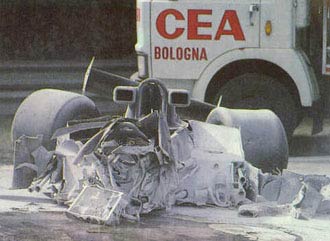
Peterson had just had an accident the first turn pileup at 1978 Italian GP, which involves nine other racers. He just had a leg injury that relatively "mild"compared to Vittorio Brambilla who fell into a coma due to head crushed by the tires "fly".
Peterson was rushed to a Milan hospital for examination. Apparently she suffered several broken bones in her legs. He was scheduled for surgery the next morning. But before the morning comes, Peterson had fat emboli originating from the broken bone in her leg, and died Monday, September 11 morning....
5. Gilles Villeneuve (1950-1982), Canadian driver, died in 1982 Belgian GP qualifying

 He just did start his second GP. Due to coordination problems marshal, a yellow light does not turn on after Didier Pironi (lagi-lagi!) stalled on the grid at start.
Paletti late in responding and noses his car crashed into the rear of the car Pironi. He suffered a bump on his chest and was unconscious. The car next Paletti experienced a fire, and he also suffered because of asphyxia due to smoke trapped in the car.
The Marshals also took half an hour to remove Paletti. He died on arrival at the Royal Victoria Hospital in Montreal, 2 days before her birthday is the 24th.
3. Elio De Angelis (1958-1986), Italian driver, died in a car testing at the Circuit Paul Ricard, Le Castellet, France after the 1986 Monaco GP
 Automobiles De Angelis suffered a fire after the collision, with the downforce lost due to sudden loss of rear wing. He suffered only minor burns and a broken collarbone, but De Angelis could not get out of his car.
Especially in the circuit in question almost no marshal is getting in place. New Marshal arrived 30 minutes later with a helicopter and fled into the De Angelis Marseille hospital. He also died there 29 hours later.
2. Roland Ratzenberger (1960-1994), Austrian driver, died in 1994 San Marino GP qualifying
 Ratzenberger had just raced 1 time in F1, the car front wing damaged in the previous qualifying round. Due to the high speed, plus the wind pressure, the front wing was broken and jammed under his car.
Cars Ratzenberger was unable to turn and hit a solid wall with a speed of 315 km / hour. After the collision, the car circled back to the track, and it was obvious that Ratzenberger had a broken neck which killed him instantly on the spot.
1. Ayrton Senna da Silva (1960-1994), Brazilian driver, died at San Marino GP 1994
3 times world champion is the start from pole position. Shortly after the start, Pedro Lamy and Jyrki Jarvilehto in a collision which resulted in the release of the safety car. Safety car out for 5 rounds.
At 2 the next round, Senna's car looks understeer and suddenly derailed at Tamburello corner, with a speed of 310 km / h, then hit a solid wall.
Senna the actual cause of death is still mysterious. Mentioned Senna suffered penetrating injuries due to fractures that penetrate the helmet suspension and the front of the skull.
Ironically videos that record the moment of collision along the 1.5 seconds was missing. Damon Hill, Senna's teammate at Williams in 1994, insisted that Senna had made a mistake common, but fatal.
Most big fan of Senna suspect there is a conspiracy aimed at killing the 34-year-old racer. Many also are debating whether spontaneous or Senna died at the hospital, because he was not pronounced dead on the track.
Also been reported that the video turned out there and show Senna "off" after his car steering wheel twisted (but the video is also questionable authenticity). However actual incident, this tragedy has changed the view of the FIA on safety in the scope of Formula 1.
Source:
hnz11.wordpress.com
Here are 10 of the many deaths in the history of Formula 1 that "establish" security Formula 1 today.
10. Lorenzo Bandini (1935-1967), driver Italia, meninggal di GP Monako 1967
The pole fell and penetrated the fuel tank, so there was a fire that once made Bandini trapped. Furthermore, the car exploded because of hot steam from the fuel gas exhaust pipe. Bandini suffered severe burns and was treated at a local hospital for 3 days, before it finally died on May 10, 1967.
The car ended upside down and its fuel tank begins to burn. One other rider, David Purley (1945-1985) stopped the car and volunteered to try to help Williamson out of his car.
Yet his efforts also failed because the car's position is reversed. Unfortunately the suspect actually marshal Purley car crashes. Upon learning the true condition, marshal fire extinguisher did not work as well to help Williamson.
Larger trucks recently arrived almost 10 minutes later, where Williamson had already been killed by asphyxia.
8. Koinigg Helmuth (1948-1974), Austrian driver, died in the United States GP 1974
Deaths due to the installation of Armco barrier metal that is not appropriate. After suffering a suspension failure in the slow corners, the car hit the Armco barrier wall with your head against the wall Koinigg first.
Low-speed car but due to the Armco is not installed properly (the sharp edges are still visible!), metal barrier that also sharply Koinigg injuring his neck until his head severed.
He parked his car on the left side of the track straight. Zorzi difficulty out of the car for failing to release the oxygen pipe from his helmet, but the rear of the car had issued a fire.
This makes Zorzi need help 2 people from across the track marshals to douse the flames from his car. Two marshals it was crossing the tracks that are impassable F1 car without permission.
First Marshal escape. But the second marshal, Fredrik Jansen van Vuuren (19 years), who brought a fire extinguisher tank weighing 20 kg, was hit by a car Pryce (with speed 270 km / h).
Pryce hit van Vuuren because of his view obstructed by a car Hans-Joachim Stuck (who almost hit a van Vuuren, too, but managed to escape at the last second).
Van Vuuren was thrown into the air, with bodies shattered to not be recognized, and died instantly. Meanwhile, Pryce, who was suddenly hit by tank fire, died instantly because of heavy objects was almost decided his head. He was thrown out of the car. Pryce car is still running without driver as far as several hundred meters.
6. Ronnie Peterson (1944-1978), Swedish driver, died in hospital after accident 1978 Italian GP
Peterson was rushed to a Milan hospital for examination. Apparently she suffered several broken bones in her legs. He was scheduled for surgery the next morning. But before the morning comes, Peterson had fat emboli originating from the broken bone in her leg, and died Monday, September 11 morning....
5. Gilles Villeneuve (1950-1982), Canadian driver, died in 1982 Belgian GP qualifying
In the race, he ran the car slowly in the left lane. Jochen Mass car. They alsoexperienced miscommunication. Mass who thinks Villeneuve will record the time,intend to let pass by moving to the right.
Villeneuve who intends to precede the Mass (which was there in the left lane),immediately turned the car to the right. They collided in the right lane. Car Villeneuve,who was behind, flew into the air and landing (nose first) with a speed of 225 km /hour.
Villeneuve was dragged as far as 50 meters to the hooks on the edge of the trackfence, where then he was caught and suffered a broken neck. He was immediatelytaken to hospital St.Raphael University, and was kept alive for several hours beforeshe died around 9 pm local time.
Villeneuve who intends to precede the Mass (which was there in the left lane),immediately turned the car to the right. They collided in the right lane. Car Villeneuve,who was behind, flew into the air and landing (nose first) with a speed of 225 km /hour.
Villeneuve was dragged as far as 50 meters to the hooks on the edge of the trackfence, where then he was caught and suffered a broken neck. He was immediatelytaken to hospital St.Raphael University, and was kept alive for several hours beforeshe died around 9 pm local time.
4. Riccardo Paletti (1958-1982), Italian driver, died in 1982 Canadian GP
Paletti late in responding and noses his car crashed into the rear of the car Pironi. He suffered a bump on his chest and was unconscious. The car next Paletti experienced a fire, and he also suffered because of asphyxia due to smoke trapped in the car.
The Marshals also took half an hour to remove Paletti. He died on arrival at the Royal Victoria Hospital in Montreal, 2 days before her birthday is the 24th.
3. Elio De Angelis (1958-1986), Italian driver, died in a car testing at the Circuit Paul Ricard, Le Castellet, France after the 1986 Monaco GP
Especially in the circuit in question almost no marshal is getting in place. New Marshal arrived 30 minutes later with a helicopter and fled into the De Angelis Marseille hospital. He also died there 29 hours later.
2. Roland Ratzenberger (1960-1994), Austrian driver, died in 1994 San Marino GP qualifying
Ratzenberger had just raced 1 time in F1, the car front wing damaged in the previous qualifying round. Due to the high speed, plus the wind pressure, the front wing was broken and jammed under his car.Cars Ratzenberger was unable to turn and hit a solid wall with a speed of 315 km / hour. After the collision, the car circled back to the track, and it was obvious that Ratzenberger had a broken neck which killed him instantly on the spot.
1. Ayrton Senna da Silva (1960-1994), Brazilian driver, died at San Marino GP 1994
3 times world champion is the start from pole position. Shortly after the start, Pedro Lamy and Jyrki Jarvilehto in a collision which resulted in the release of the safety car. Safety car out for 5 rounds.
At 2 the next round, Senna's car looks understeer and suddenly derailed at Tamburello corner, with a speed of 310 km / h, then hit a solid wall.
Senna the actual cause of death is still mysterious. Mentioned Senna suffered penetrating injuries due to fractures that penetrate the helmet suspension and the front of the skull.
Ironically videos that record the moment of collision along the 1.5 seconds was missing. Damon Hill, Senna's teammate at Williams in 1994, insisted that Senna had made a mistake common, but fatal.
Most big fan of Senna suspect there is a conspiracy aimed at killing the 34-year-old racer. Many also are debating whether spontaneous or Senna died at the hospital, because he was not pronounced dead on the track.
Also been reported that the video turned out there and show Senna "off" after his car steering wheel twisted (but the video is also questionable authenticity). However actual incident, this tragedy has changed the view of the FIA on safety in the scope of Formula 1.
Source:
hnz11.wordpress.com